

ADVERTISEMENT
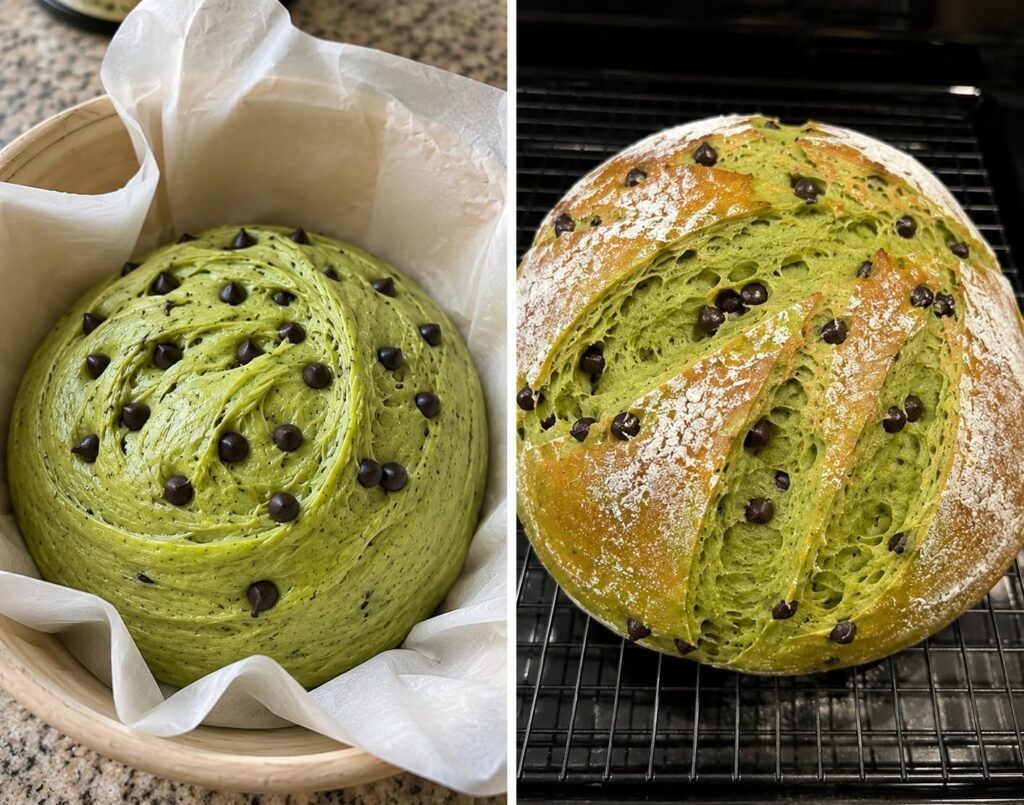
Sourdough Green Bread Loaf is a vibrant, naturally colored artisan bread that combines the tangy flavor of sourdough with nutrient-rich greens such as spinach, kale, parsley, or herbs. The result is a stunning loaf with a beautiful green crumb, a crisp golden crust, and a flavor that’s both earthy and delicious.
Perfect for sandwiches, toast, brunch boards, or special occasions like St. Patrick’s Day, this bread is a creative way to incorporate extra vegetables into your baking while maintaining all the wonderful characteristics of traditional sourdough bread.
The natural green color comes entirely from fresh greens, making this loaf both visually impressive and wholesome. Whether you’re an experienced sourdough baker or trying something new, this recipe is a fun and rewarding project.
ADVERTISEMENT
Why You’ll Love This Recipe
This sourdough loaf is:
Naturally green
Made with fresh ingredients
Full of sourdough flavor
Rich in nutrients
Beautiful for entertaining
Perfect for sandwiches
Free from artificial coloring
Great for special occasions
What Makes Green Bread Special?
Unlike traditional sourdough, this loaf incorporates blended greens directly into the dough.
Benefits include:
Natural color
Extra nutrients
Unique flavor
Beautiful presentation
Increased moisture
The greens add subtle earthiness without overpowering the classic sourdough taste.
Ingredients
For the Levain
50 grams active sourdough starter
50 grams bread flour
50 grams water
For the Dough
500 grams bread flour
300 grams water
100 grams spinach leaves
25 grams parsley
10 grams fresh basil
100 grams active levain
10 grams sea salt
Equipment Needed
Dutch oven
Kitchen scale
Large mixing bowl
Dough scraper
Banneton basket
Blender
Sharp bread lame or knife
Choosing Your Greens
The best greens for this recipe include:
Spinach
Provides:
Bright color
Mild flavor
Soft texture
Kale
Provides:
Deep green color
Earthy flavor
Parsley
Provides:
Freshness
Herbaceous notes
Basil
Provides:
Aromatic flavor
Combining several greens creates the most vibrant loaf.
Preparing the Levain
The night before baking, combine:
Starter
Flour
Water
Mix thoroughly.
Cover loosely.
Allow to ferment for:
8–12 hours
at room temperature.
The levain is ready when:
Doubled in size
Bubbly
Pleasantly sour
Preparing the Green Mixture
Wash all greens thoroughly.
Place in a blender with the water.
Blend until completely smooth.
The mixture should be bright green and free from large pieces.
This puree will provide the loaf’s natural color.
Step 1: Mix the Dough
In a large bowl combine:
Bread flour
Green puree
Mix until no dry flour remains.
The dough will appear green and shaggy.
Cover and let rest for:
30 minutes
This process is called autolyse.
Why Autolyse Matters
Autolyse helps:
Hydrate flour
Improve gluten development
Enhance dough strength
Improve texture
Skipping this step can reduce dough quality.
Step 2: Add Levain and Salt
Add:
Active levain
Salt
Mix thoroughly using your hands.
Pinch and fold until fully incorporated.
The dough should become smoother and more cohesive.
Step 3: Begin Bulk Fermentation
Cover the bowl.
Allow the dough to rest at room temperature.
Total bulk fermentation time:
4–6 hours
depending on room temperature.
Stretch and Fold Schedule
Perform stretch and folds every:
30 minutes
for the first 2 hours.
Complete:
4 sets total
This strengthens the gluten structure.
How to Stretch and Fold
Grab one side of the dough.
Stretch upward.
Fold toward the center.
Rotate the bowl and repeat.
Perform four folds during each set.
The dough becomes smoother with each round.
Signs Bulk Fermentation Is Complete
The dough should:
Increase by about 50%
Feel airy
Show bubbles
Jiggle slightly
Avoid over-fermentation.
Step 4: Pre-Shaping
Lightly flour your work surface.
Turn the dough out gently.
Shape into a loose round.
Allow it to rest for:
20 minutes
This helps relax the gluten.
Step 5: Final Shaping
Shape the dough into a tight boule or batard.
Create surface tension by pulling the dough toward you.
Proper shaping supports oven spring.
Step 6: Cold Proof
Place the dough seam-side up into a floured banneton.
Cover.
Refrigerate for:
12–16 hours
This develops flavor and makes scoring easier.
Why Cold Fermentation Helps
Cold proofing:
Improves flavor
Enhances texture
Creates better crust
Makes dough easier to handle
Many bakers consider this step essential.
Step 7: Preheat the Oven
Place a Dutch oven inside your oven.
Preheat to:
475°F (245°C)
for at least:
45 minutes
A fully heated Dutch oven creates excellent oven spring.
Step 8: Score the Dough
Remove the dough from the refrigerator.
Turn it onto parchment paper.
Use a lame or sharp knife to score the surface.
Scoring controls expansion during baking.
Step 9: Bake with Steam
Carefully place the dough into the hot Dutch oven.
Cover with the lid.
Bake for:
25 minutes
The lid traps steam and helps create a beautiful crust.
Step 10: Bake Uncovered
Remove the lid.
Reduce oven temperature to:
450°F (230°C)
Bake for:
20–25 minutes
until deeply golden brown.
Step 11: Cool Completely
Transfer bread to a cooling rack.
Allow it to cool for:
At least 2 hours
before slicing.
Cutting too early can result in a gummy crumb.
See more on the next page to continue reading →
ADVERTISEMENT