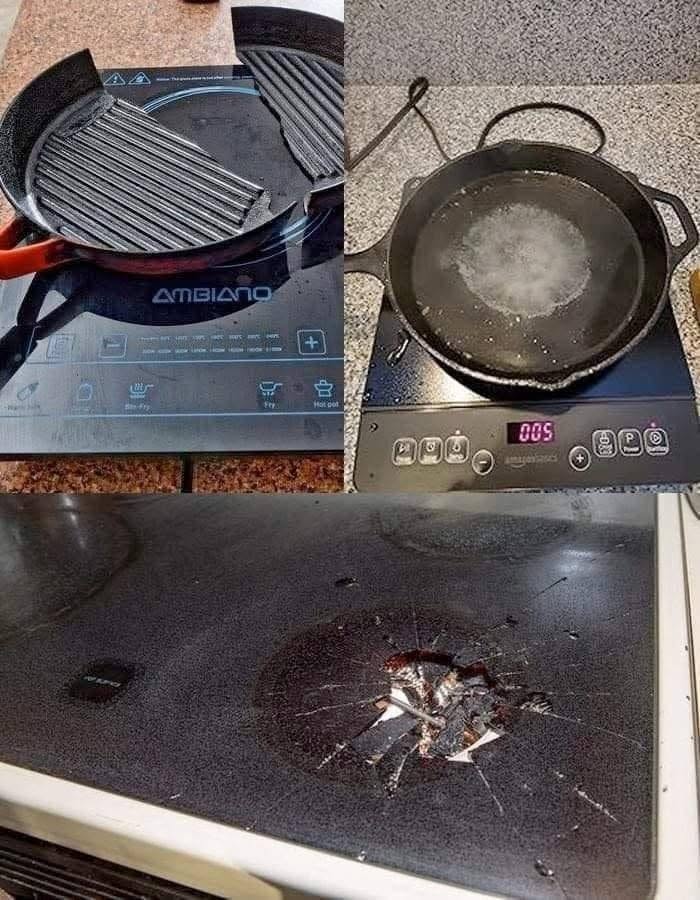

5. Placing Extremely Hot Items Directly on Cooler Glass Areas
ADVERTISEMENT
Rapid temperature changes can place stress on glass surfaces.
Some manufacturers caution against exposing the cooktop to sudden extreme temperature differences.
Using trivets or heat-resistant surfaces for very hot cookware or lids may help reduce unnecessary stress on the glass.
ADVERTISEMENT
6. Ignoring Chips or Cracks
Small chips and cracks should not be overlooked.
Even minor damage can potentially worsen over time, particularly when exposed to repeated heating and cooling cycles.
If you notice damage, consult the manufacturer’s recommendations or seek professional evaluation.
7. Heating Empty Cookware
Leaving an empty pot or pan on high heat can cause cookware temperatures to rise rapidly.
This may damage the cookware itself and place additional stress on the cooking surface.
Whenever possible, add food or liquid before applying high heat.
8. Using Cookware With Damaged or Rough Bottoms
Pots and pans with rough, warped, or damaged bases can scratch the glass surface.
Smooth-bottomed cookware is generally recommended for glass cooktops.
Regularly inspect your cookware for damage.
Many cooktop problems can be avoided simply by following the recommendations provided by the manufacturer.
ADVERTISEMENT